Waivers signed before they arrive
Each guest claims their own ticket from the booking's link and signs their own waiver on their own phone before they arrive. For every minor the signer is asked if the child is theirs; if not, the parent gets an invite. Check-in shows every guest's status. One adult signing for eight kids is how the old systems do it, and it is why the desk backs up.
We've lived these frustrations
7 years running Charleston Aqua Park. We know exactly what doesn't work.
Endless iPad queues
Families waiting 20+ minutes just to sign
One parent, 8 waivers
Typing everyone's info by hand, half of it wrong
Kids melting down
They see the water but can't get in
Clunky kiosks
Software that feels like 2010
Pre-arrival claiming
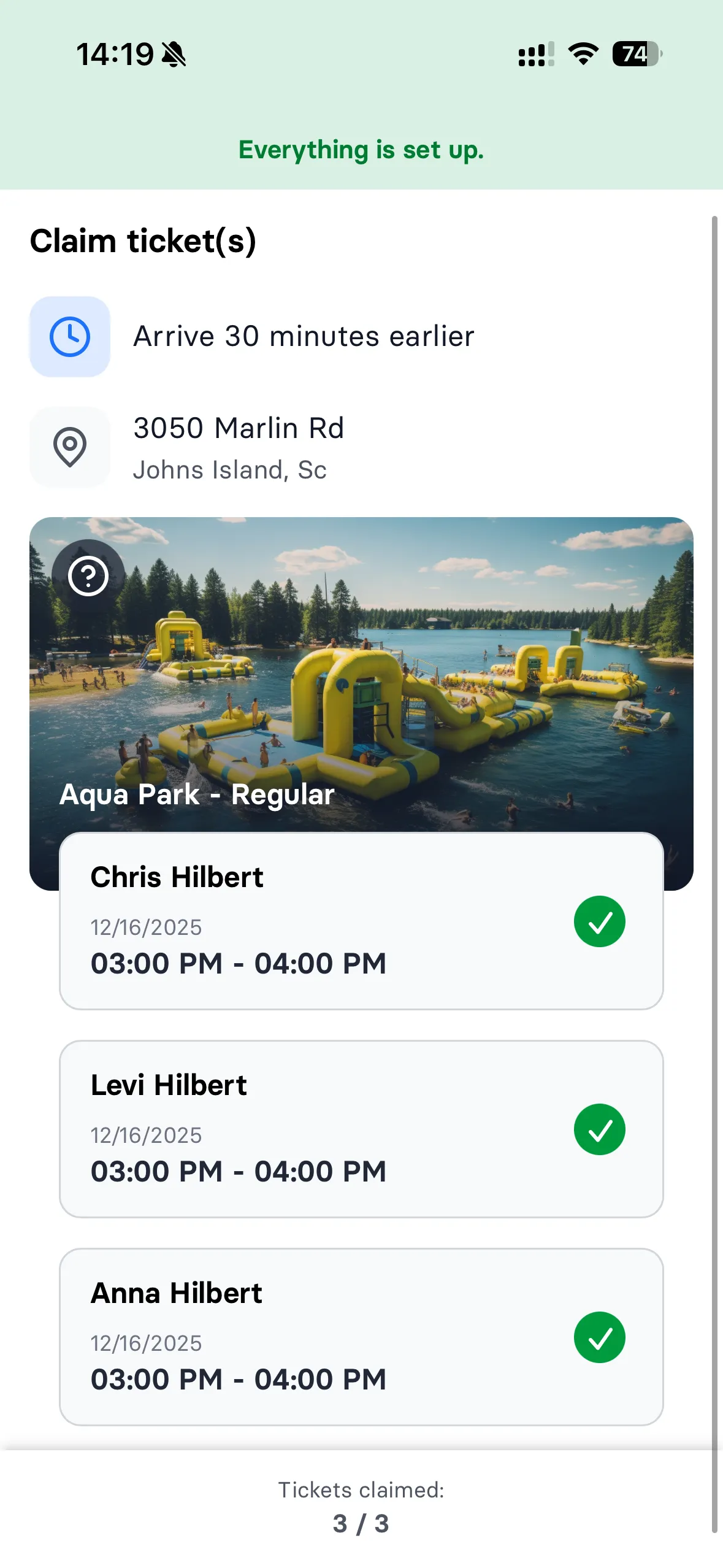
When someone books, they get a claim link. They share it with their group. Each person claims their ticket and signs their waiver, all before arriving.
- Booking owner gets shareable link
- Each person claims their own ticket86% are assigned before check-in
- Each adult signs their own waiver93% arrive already signed
- Everyone arrives ready to goonly 0.6% still need the desk
Measured across live wakesys parks. Method further down this page.


Share a link. Parents handle the rest.
Birthday party organizer books 8 tickets. Shares a link with 7 other parents. Each parent claims their kids, enters their own info, signs their own waivers.
You see real-time status. Green means ready. When everyone's done, the party shows up and walks straight in. No chaos. No waiting.
- No more chasing people for info
- No more wrong birthdays
- No more 20-minute waiver queues
“The waiver was signed by a friend at a birthday party. The parents never signed anything. The park thought they were covered.”
Every park operator's worst nightmare
Every guest is someone's child.
At trampoline parks, indoor playgrounds, aqua parks and laser tag, the majority of guests are under 18. Yet most booking systems treat minor handling as an afterthought. A checkbox. A single age field. No verification.
wakesys was built from day one with the parent-child relationship as a first-class concept, not bolted on later.
Kids can't book themselves
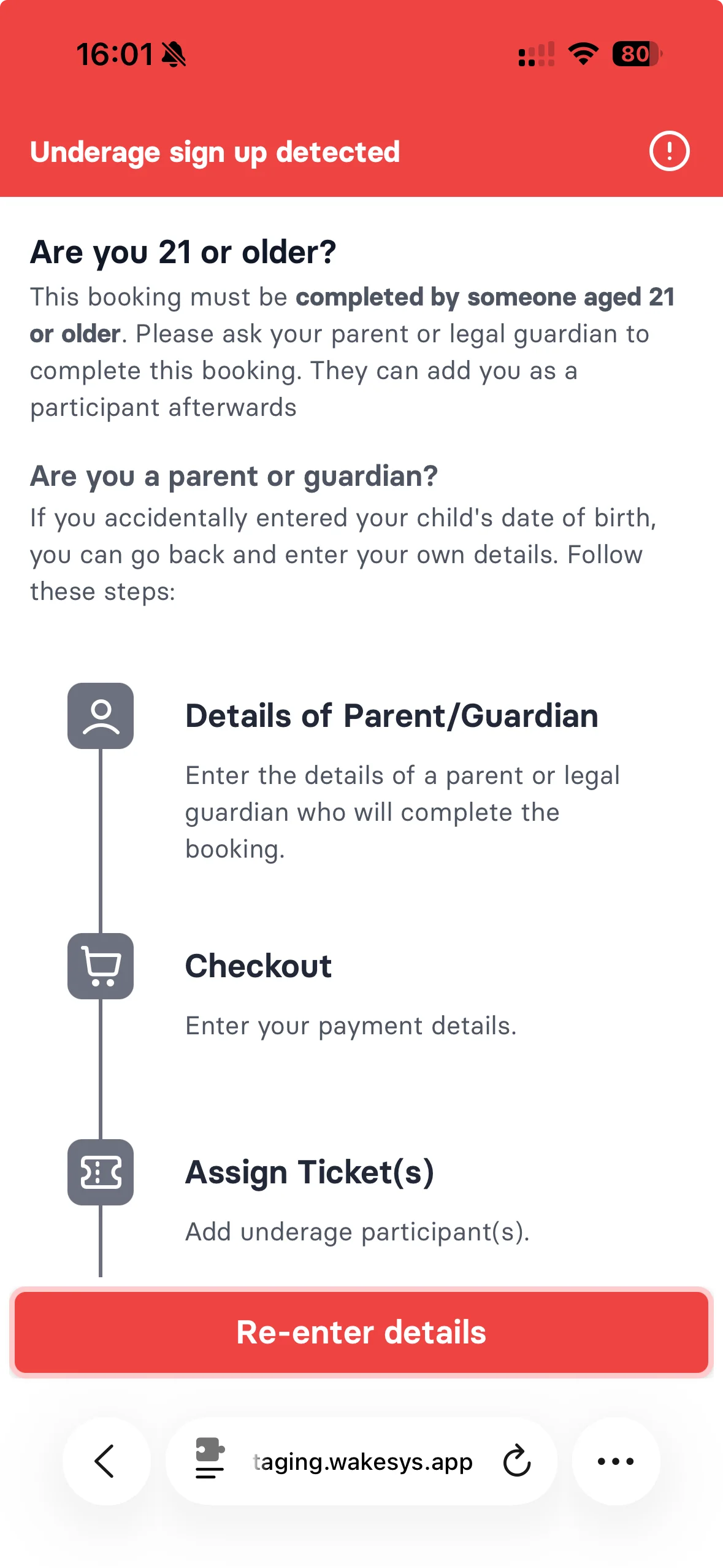
Most systems just show a validation error when a minor enters their real date of birth. The kid changes the year and checks out. The park has a booking and a waiver signed by a minor.
- 1Minor enters their real date of birth
- 2Full-screen interstitial blocks the booking
- 3Form is cleared, all the child's info is wiped
- 4Parent takes the phone and enters their own details
Someone else's child.
Six kids, one adult, five waivers that may be worthless. In most places a release covering a child only holds up when the parent or a court-appointed guardian signs it. Not the birthday host. Not the aunt. Not the coach. We ran a park for years without knowing that. If the operator does not know, the parent standing in your lobby with six kids and a phone has no chance.
- 1Narrow the options
- 2Force the distinction
- 3Stop them at the line
The legally valid waiver is now on file. The friend's signature is superseded.
The wrong person signed? We catch it.
A child goes to a trampoline park for a friend's birthday party. The friend's parent signs the waiver for the child, claiming authority to do so. The park has a signed waiver on file. The following week, the same child comes back with their own parents. Most systems say: valid waiver on file, you're good. The child gets hurt. The parents correctly point out they never signed anything. The park tries to fall back on the friend's waiver. But the friend can argue they only gave consent for that one visit, not future visits. It's a legal mess that destroys the park's position.
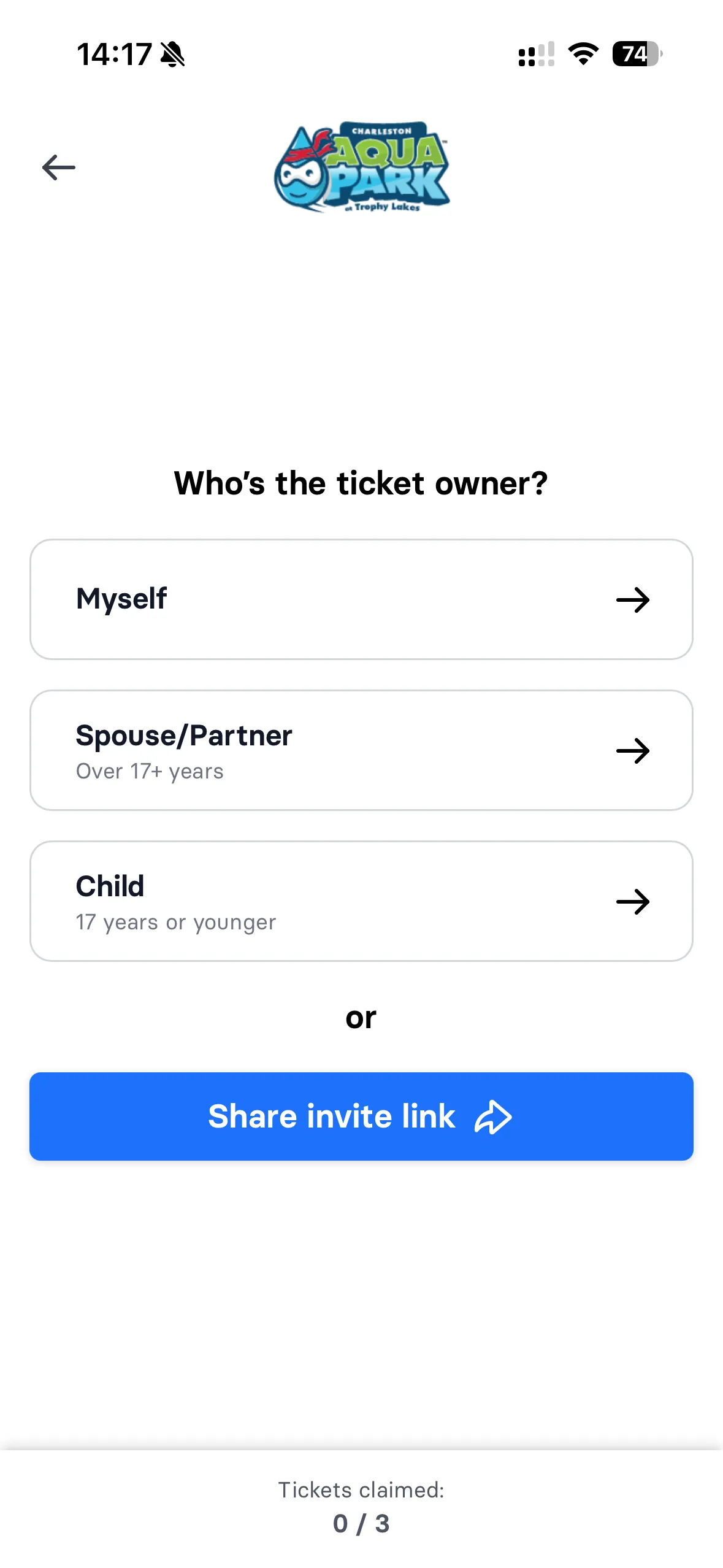
- 1System asks: my own child, or someone else's child?
- 2Relationship is stored structurally in the database
- 3When the actual parent shows up, the child is recognized via global deduplication
- 4System sees the waiver was signed by a non-guardian and requires the parent to re-sign
No QR codes. No re-entering info. No skipping the line.
In most systems, when a returning guest's waiver has expired, staff hand them a QR code. The guest scans it with their phone, fills out the entire form from scratch: name, email, DOB, address, kids. All information the park already has. Then they awkwardly skip the line to get back to the front desk. It creates duplicates, it wastes time, and it's terrible operations.
With wakesys, staff tap one button and the waiver appears on the customer iPad right at the register, pre-filled with all existing information. The guest just reads, signs, and they're done, without leaving the counter and without re-entering a thing.
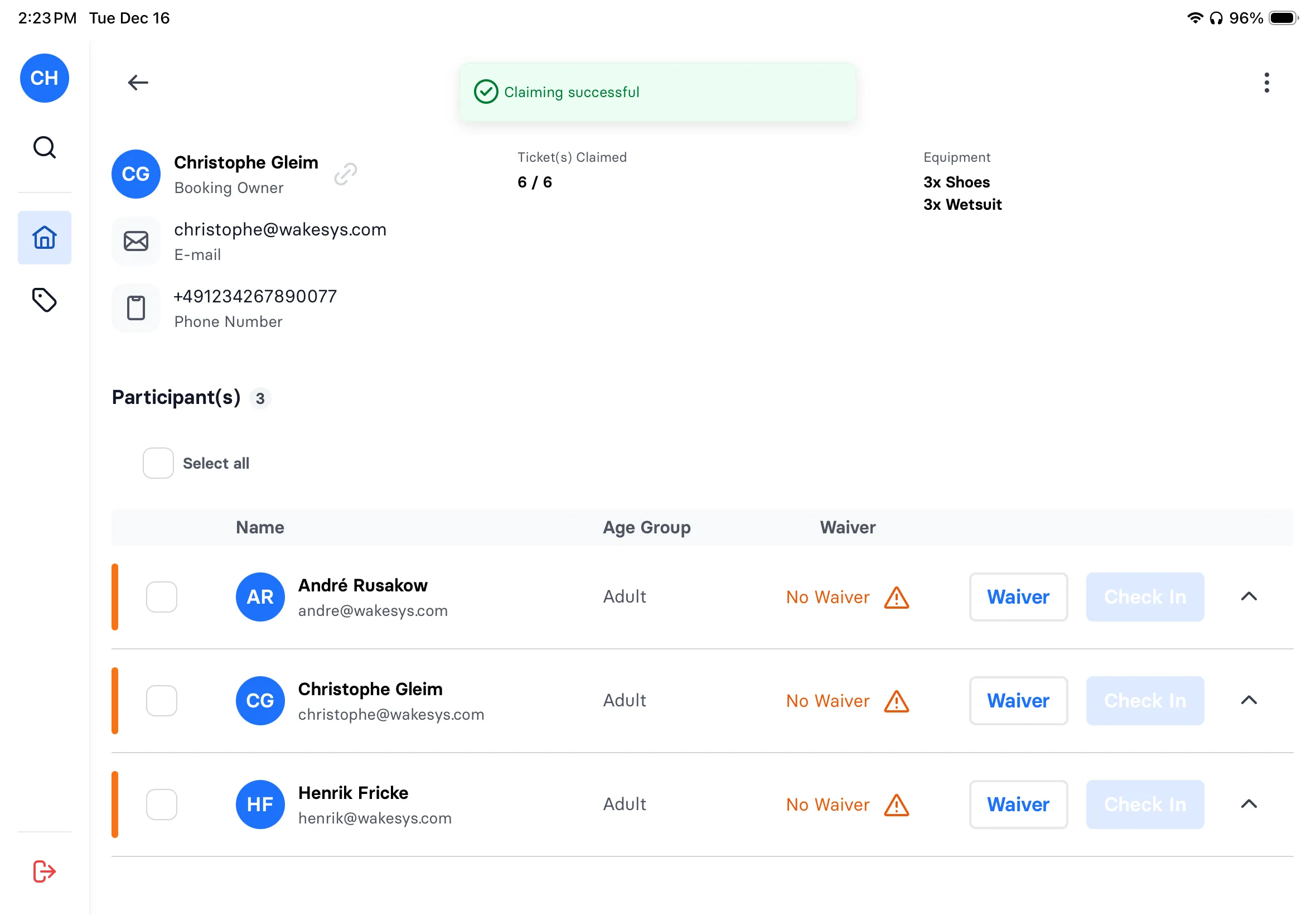
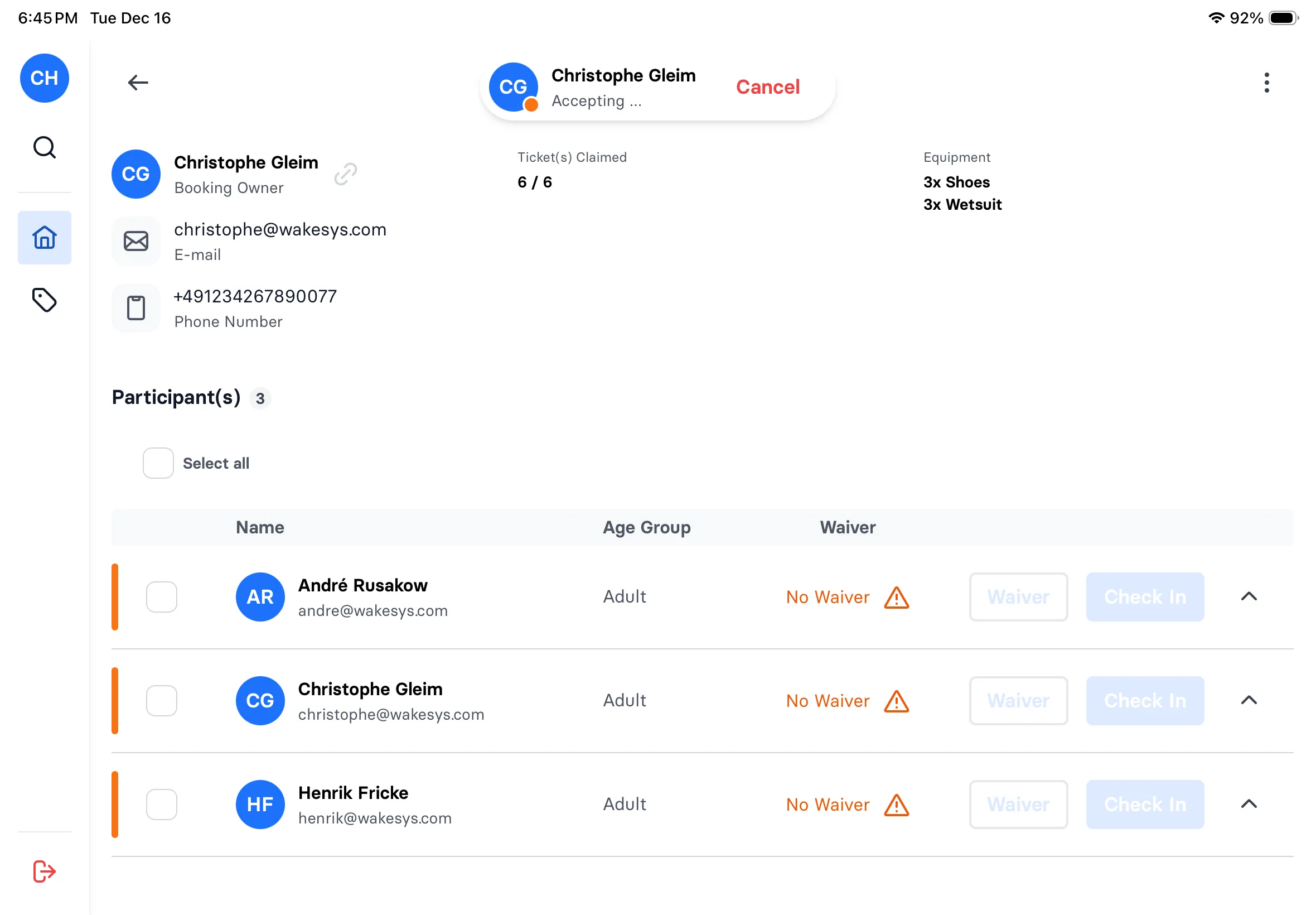
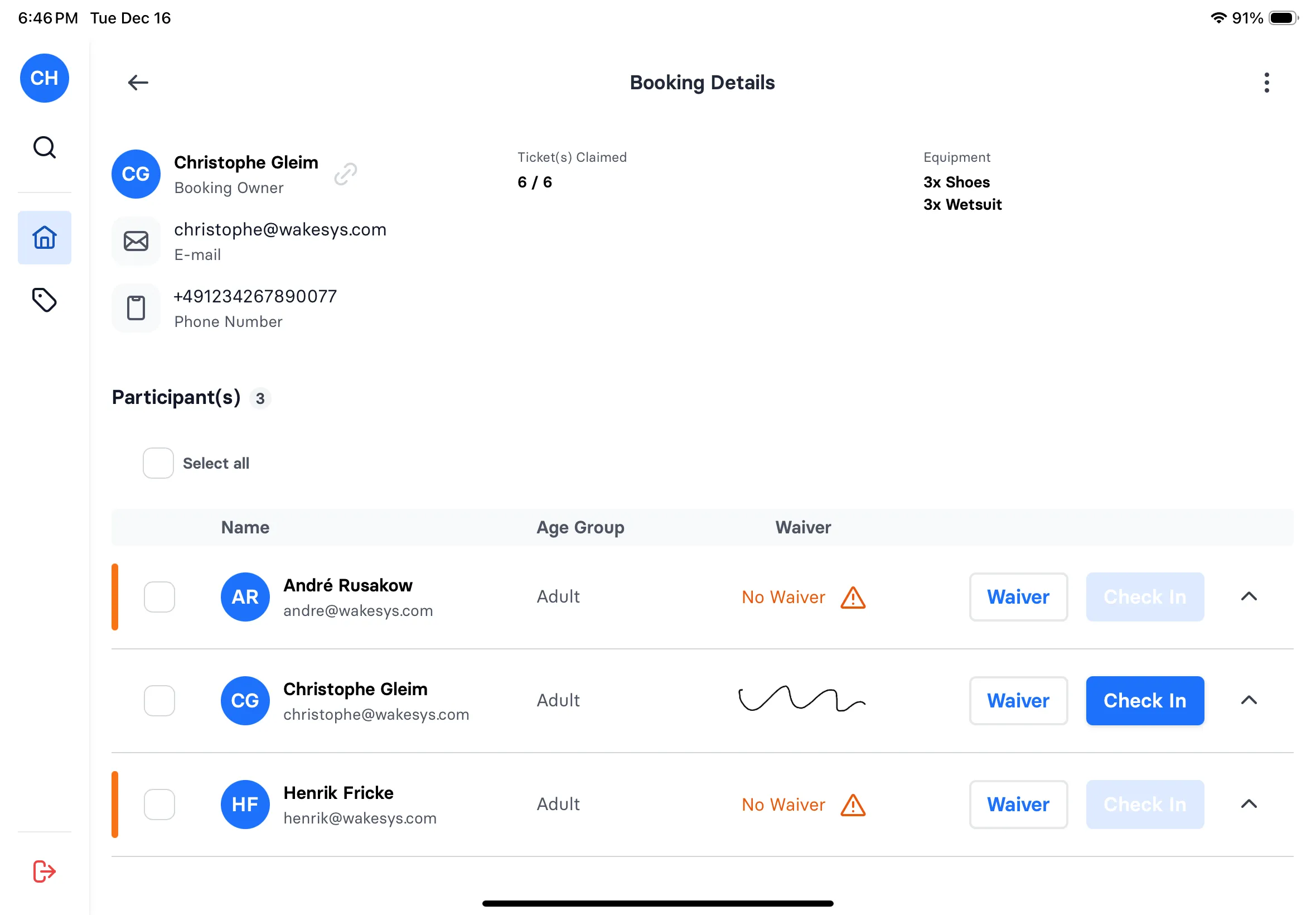
Cash Register

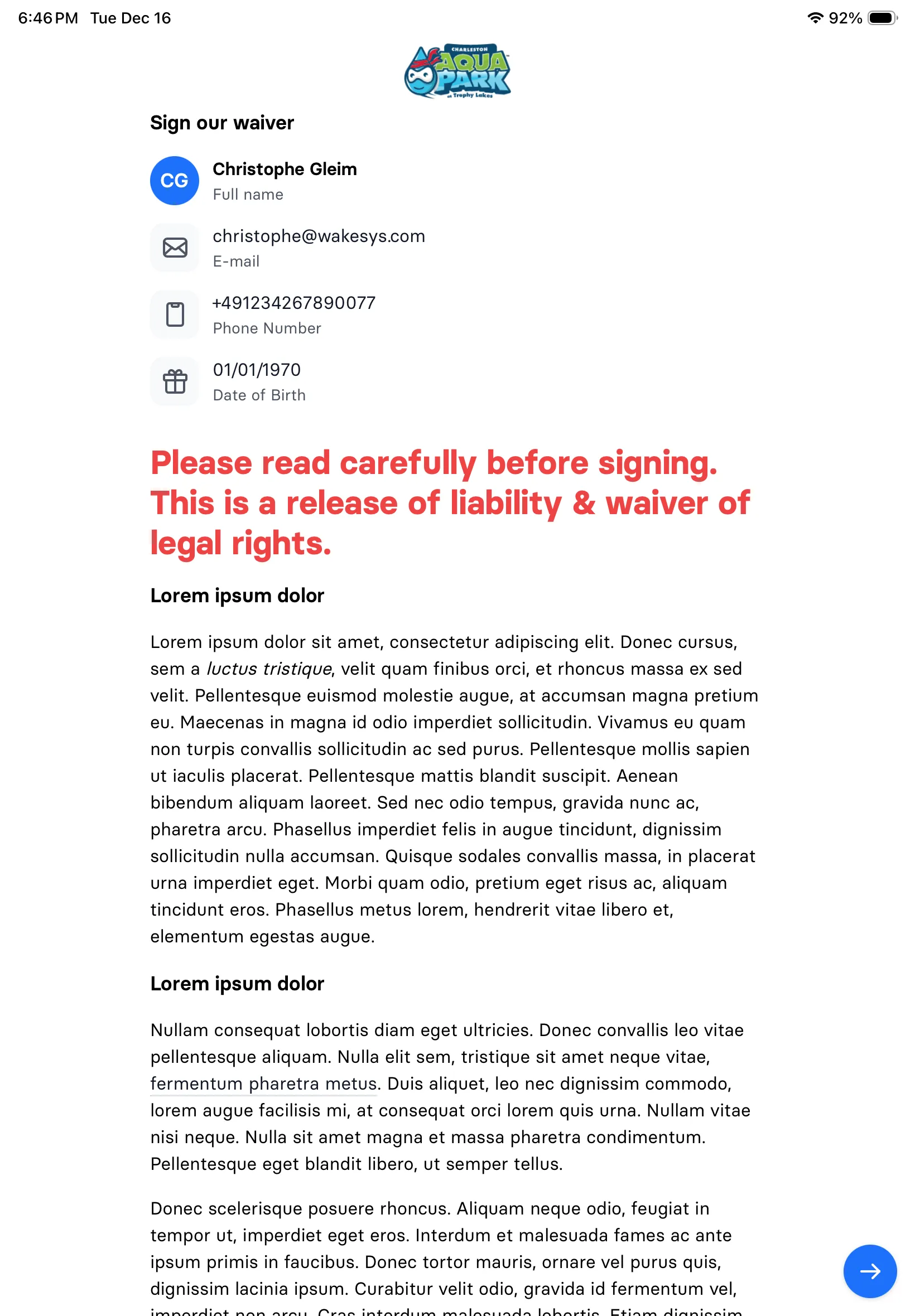
Customer iPad
93% of guests arrive with the waiver already signed.
Not a projection and not a pilot. This is what actually happens at wakesys parks running check-in.
arrive with a signed waiver already on file, before they reach the desk
of tickets are assigned to a named guest before check-in, by the host or the guest themselves rather than your staff
of guests still end up signing a waiver at the desk
Based on tens of thousands of checked-in tickets at live wakesys parks. Counts tickets guests booked online and bookings staff entered in advance, such as groups and birthday parties. Same-day walk-up sales at the counter are excluded, because staff assign those at the till by definition.
And there's more.
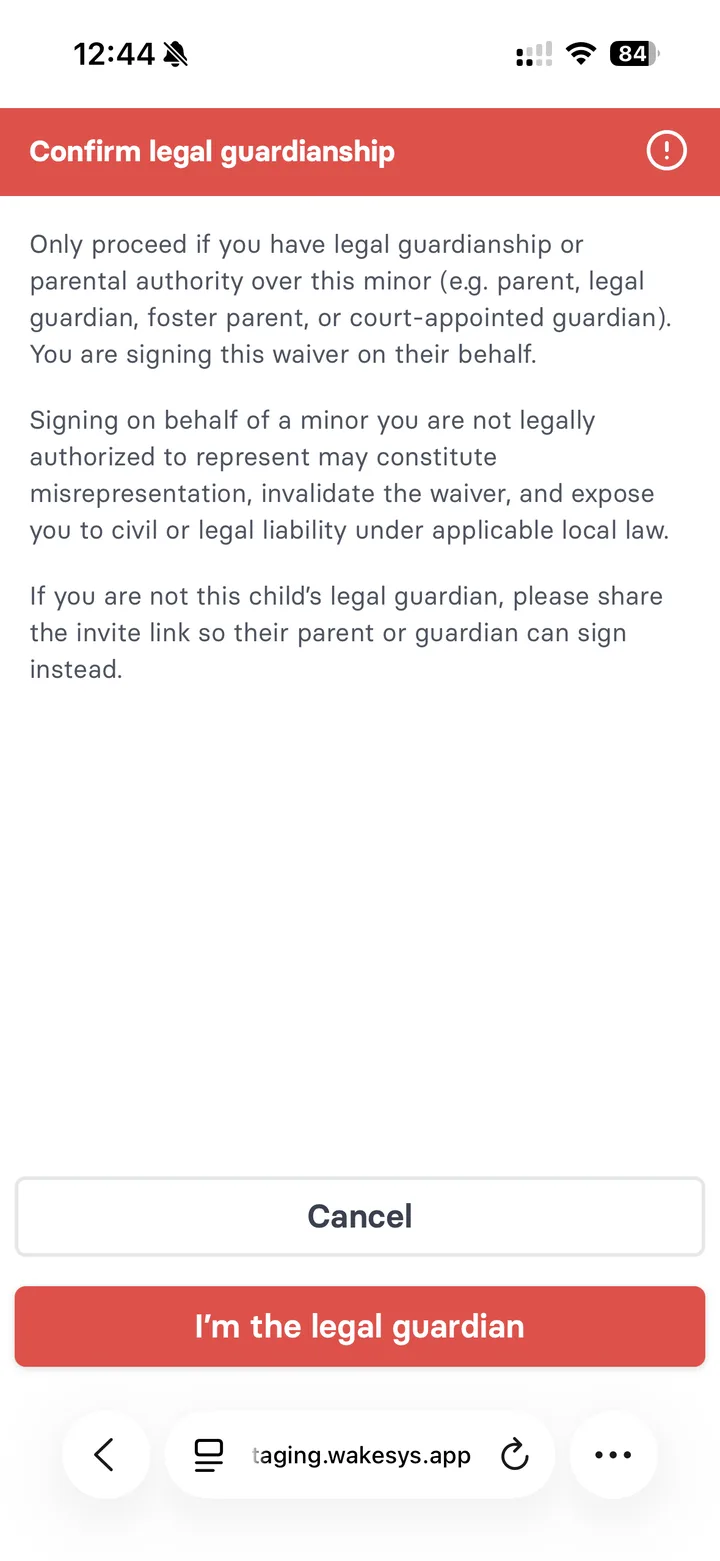
Three layers of documented protection. If a minor clicks "I'm a parent" and enters a fake DOB, they've already: entered their real date of birth (captured), been shown an explicit legal message, and actively claimed to be a guardian. In a deposition, you can demonstrate you went above and beyond to prevent underage self-booking, and the customer deliberately circumvented three layers of protection.
Every door a child can come through. The same confirmation fires in the online booking claim flow, at the on-site kiosk, and when someone adds a child to their account. If your park does not use a waiver, the dialog is worded for registration instead of signing.
Superseding signatures. When the real parent signs, their waiver replaces the one a non-guardian left behind. Both versions stay on file, so the history of who signed what, and when, is never overwritten.
One waiver per participant. A single signature never covers a list of names. Every person gets their own record, their own date of birth and their own timestamp, signed by the person entitled to sign it.
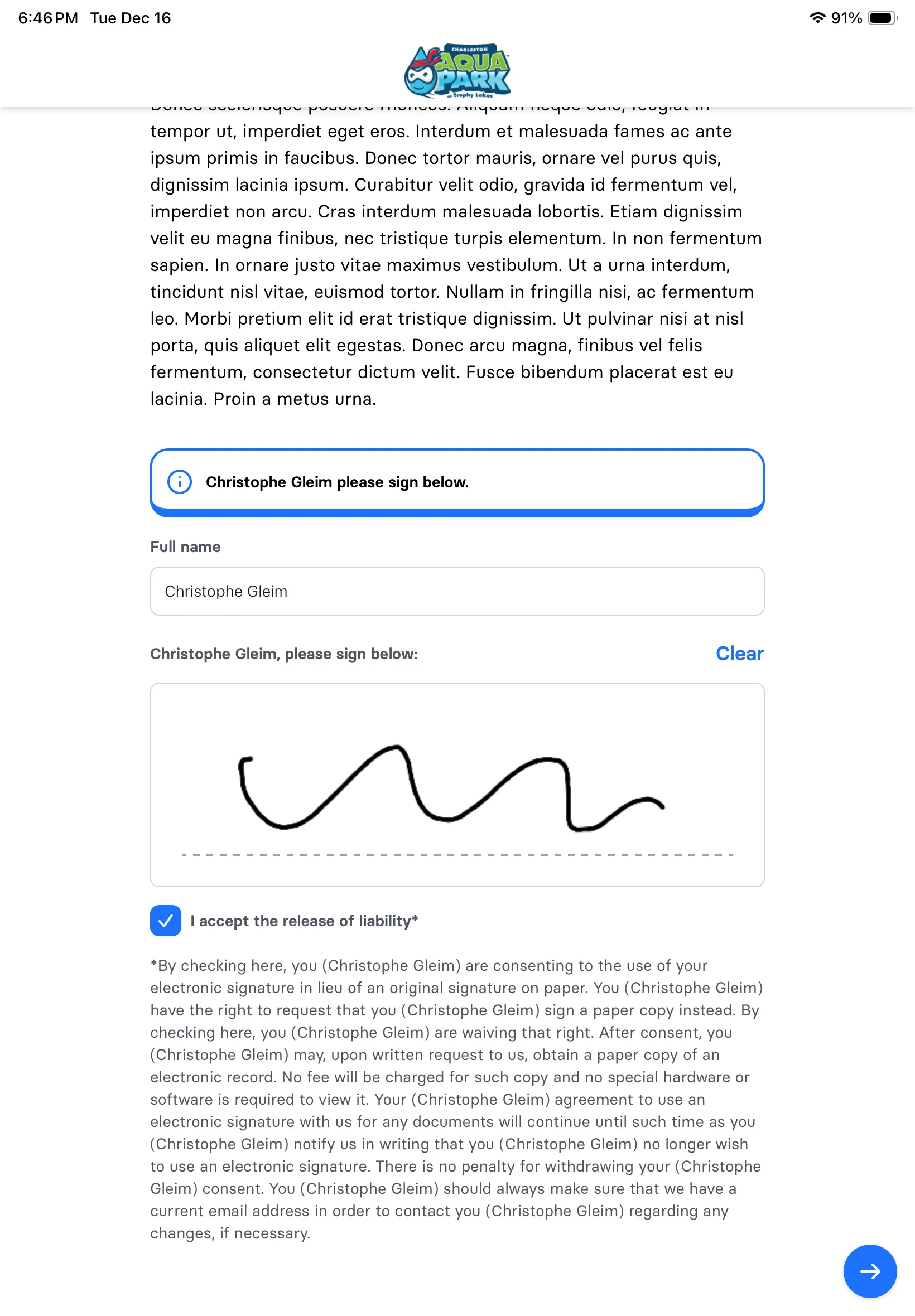
Consent to sign electronically. Guests confirm they agree to sign electronically rather than on paper, with the right to a free paper copy and to withdraw consent at any time. Who consented and when is printed on the PDF.
Tamper-evident records. A SHA-256 hash covers every field on the waiver, plus a separate checksum on the signature image. Alter anything after signing and the hash no longer matches.
Want to know what happens under the hood?
SHA-256 integrity hashing, structural minor/guardian handling, automatic revocation, 5 independent age verification checkpoints, and a guardianship confirmation before anyone signs for a child that isn't theirs. See exactly how our waiver system protects your business.
Frequently Asked Questions
Waivers work on any device: a guest's own smartphone, a tablet at the front desk, or a dedicated kiosk. Most guests sign their waiver from home on their phone after booking. For walk-ins, wakesys supports on-site tablet signing too.
When a group booking is made, wakesys sends a shareable claim link. Each family member gets their own link, signs their own waiver, and the organizer never has to chase anyone. By the time the group arrives, all waivers are already done.
wakesys automatically detects when a ticket belongs to a minor and prompts the parent or guardian to sign on their behalf. If the guardian's waiver has expired, wakesys flags it before they can proceed, so you're always protected legally.
wakesys captures what an electronic signature generally needs: the signer's typed legal name, a drawn signature, the exact release text they were shown, a timestamp, IP address and device, and explicit consent to sign electronically instead of on paper. That consent covers the right to sign a paper copy instead, the right to request a paper copy later at no charge, and the right to withdraw consent at any time without penalty. A line recording who consented and on what date is printed on the signed PDF. Waiver law varies by country and by US state, so have a local attorney review your release text.
Waivers are stored indefinitely and are linked directly to the guest's profile. Staff can see waiver status in real time from the POS. A green tick means the waiver is signed and valid, a red flag means it needs attention before check-in.
Not by accident. When a guest assigns a ticket to a minor, wakesys asks whether it is their own child or not. Choosing "not my child" opens a full screen dialog that explains what legal guardianship means and warns that signing without it may invalidate the waiver and expose the signer personally. The invite link is offered instead, so the real parent can claim the ticket and sign from their own phone. If someone confirms anyway, the relationship is stored, and when the actual parent later registers the same child, wakesys requires them to sign a waiver that supersedes it.
Before signing, the guest confirms they have read the release of liability and consent to signing this document electronically. The supporting text explains that they may sign a paper copy instead, that they can request a paper copy of any record later at no charge and with no special hardware or software, that consent continues until they withdraw it in writing, and that there is no penalty for withdrawing. Who consented and on what date is written onto the signed PDF, so the consent travels with the document instead of living only in a database.
93%, measured across tens of thousands of checked-in tickets at live wakesys parks. A further 0.6% sign at the front desk, and the rest are guests with no waiver on file yet. Over the same tickets, 86% were assigned to a named guest before check-in, done by the booking host or the guest themselves rather than by staff. The figures cover tickets guests booked online plus bookings staff entered in advance, such as groups and birthday parties; same-day walk-up sales at the counter are excluded, because staff assign those at the till by definition. No other platform in this category publishes an equivalent figure, so there is no like-for-like comparison to give.